 By admin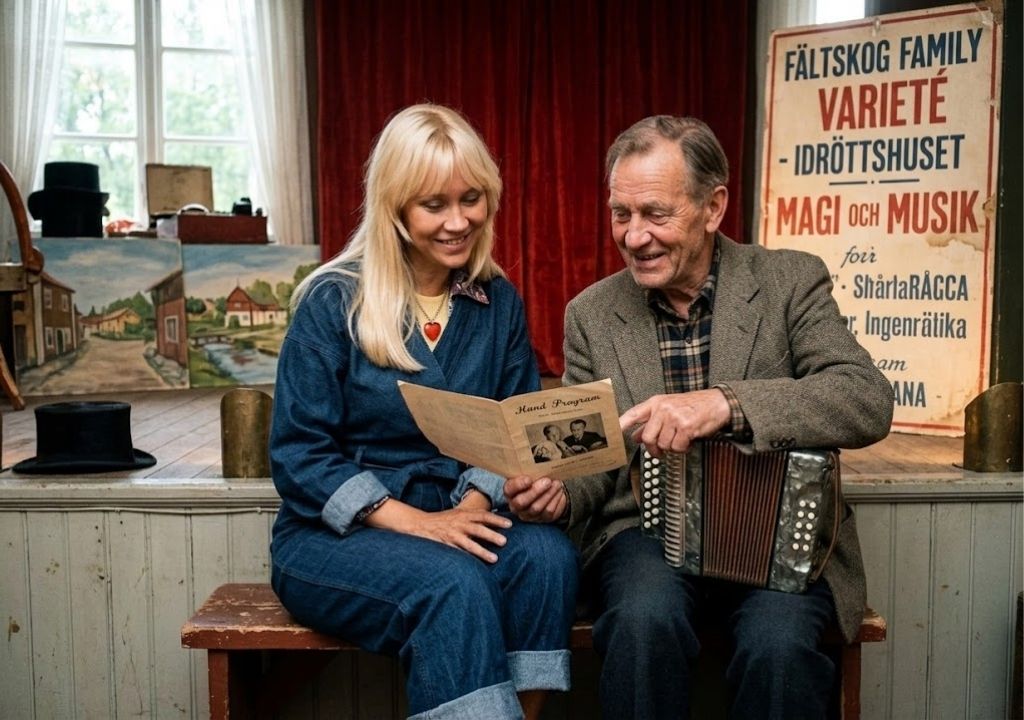
INTRODUCTION
In the winter of 1956, within the modest confines of a Jönköping social hall, a six-year-old girl took the stage for a performance that would inadvertently signal the dawn of a new era in Swedish music. Her father, Ingvar Fältskog—a department store manager by trade but a fervent devotee of amateur theater—had curated a local variety show that served as the initial canvas for his daughter’s talent. While the world would eventually recognize Agnetha Fältskog as the crystalline voice behind ABBA’s most haunting melodies, her primary education took place under the soft glow of community spotlights and the pragmatic guidance of Ingvar’s vaudevillian sensibilities. This was no accidental discovery; it was a deliberate nurturing of poise and presence within the “folkpark” tradition, a uniquely Swedish cultural infrastructure that transformed a shy child into a professional veteran before she ever reached her teens.
THE DETAILED STORY
The influence of Ingvar Fältskog on the development of Agnetha’s career was less about technical vocal instruction and more about the architecture of performance. Ingvar was a central figure in the vibrant amateur dramatics scene of Jönköping, often organizing and performing in revues that blended comedy, music, and social commentary. For Agnetha, these variety shows offered a safe yet demanding laboratory to test her affinity for the audience. Ingvar recognized early on that his daughter possessed a rare tonal clarity and an innate ability to translate complex emotions into song, but he also understood that talent without temperament is unsustainable. He instilled a level of professionalism that mirrored the disciplined routines of the Swedish entertainment circuits of the 1950s.
As Agnetha’s interests shifted toward piano and composition, Ingvar remained her most steadfast advocate, often managing the logistical hurdles of her early public appearances. The cultural climate of Jönköping during this period was one of modest means but high artistic aspiration, and Ingvar leveraged his local influence to ensure his daughter had access to the best available platforms. By the time she joined her first dance band at fifteen, she had already spent nearly a decade absorbing the nuances of stagecraft from her father’s revues. These early experiences in the folkparks—the outdoor public parks that served as the primary touring circuit for Swedish entertainers—provided a trial by fire that many modern pop stars never encounter.
The transition from Ingvar’s variety shows to the top of the charts was a linear progression fueled by paternal encouragement and the structural rigor of these family-led productions. When her debut single shattered sales records in 1968, the poise she displayed was the direct result of hundreds of hours spent under Ingvar’s tutelage. He had gifted her with more than just a stage; he had provided a psychological armor. Today, as music historians reflect on the meticulously crafted persona of Agnetha Fältskog, it is impossible to separate the global icon from the young girl in Jönköping who first learned that the distance between a small-town variety show and the world stage is navigated through discipline, a trait inherited directly from the Fältskog patriarch.