 By admin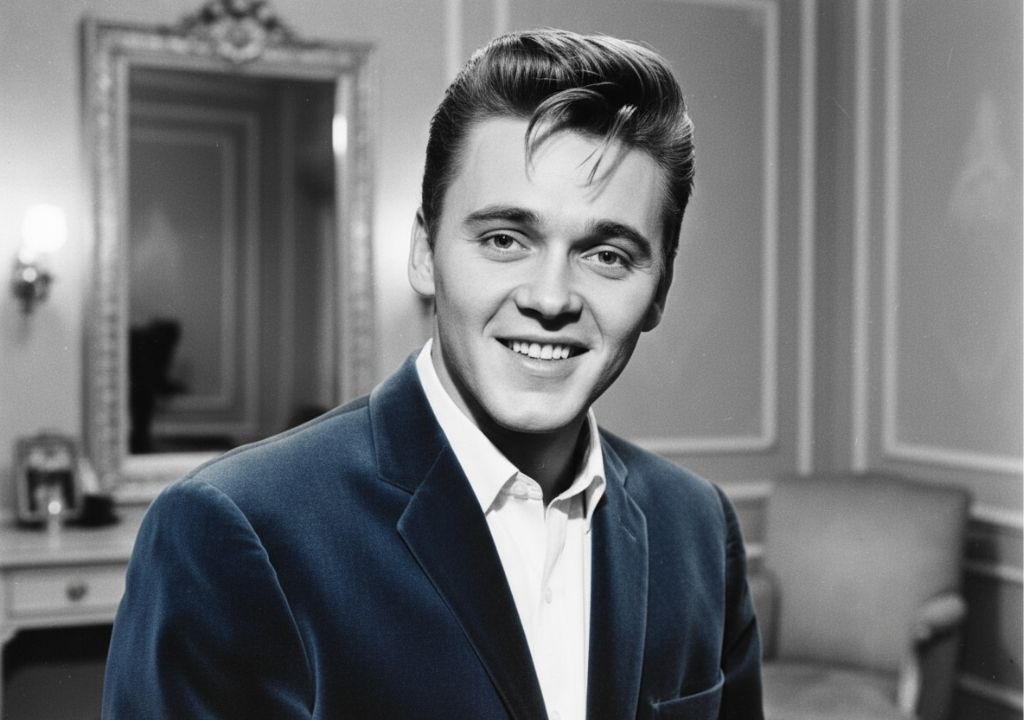

INTRODUCTION
The scent of Brylcreem and cigarette smoke often heralded the arrival of Ronald Wycherley before he ever stepped onto a stage. Known to the world as Billy Fury, the Liverpool-born sensation understood that in the nascent days of the 1960s, a pompadour was not merely a hairstyle; it was a structural manifesto of identity. While his contemporaries leaned into the chaos of the road, Fury approached his reflection with the discipline of a silversmith, recognizing that a single misplaced strand could compromise the carefully curated vulnerability of his public persona.
THE DETAILED STORY
To achieve the quintessential “DA” or Duck’s Ass—a style characterized by the hair being combed back to meet in a central seam at the nape of the neck—Fury engaged in a daily ritual that frequently spanned sixty to ninety minutes. This was not the vanity of a dilettante, but the calculated labor of an artist who viewed his aesthetic as inseparable from his sonic output. Eyewitness accounts from touring companions often detailed Fury’s insistence on a “three-mirror” setup, allowing him to inspect the symmetry of the rear seam with obsessive clarity. He utilized a specific combination of heavy pomades and light oils, layering them to ensure the sculpture survived the kinetic energy of a live performance under hot, unforgiving stage lights.

The labor involved was a fascinating paradox: the style was intended to look effortless and rebellious, yet it required more maintenance than the suits he wore. Throughout a single day, Fury would revisit the mirror for “touch-ups” that could total an additional hour, particularly before television appearances on programs like Oh Boy!. This dedication spoke to a deeper psychological truth. For a man who battled chronic heart illness from childhood, the ability to control his image provided a sense of agency that his physical health often denied him. The hair became a helmet of confidence, a gleaming, lacquered shield against the fragility of his own constitution.
As the 1960s progressed and the Beatles ushered in the era of the “mop top,” Fury’s commitment to the sculpted DA remained a defiant holdover of the rockabilly transition. He remained tethered to the belief that a star owed the public a masterpiece of presentation. Ultimately, the hours spent under the comb were not lost to vanity; they were invested in the creation of a mythos that remains a cornerstone of British pop culture history.