 By admin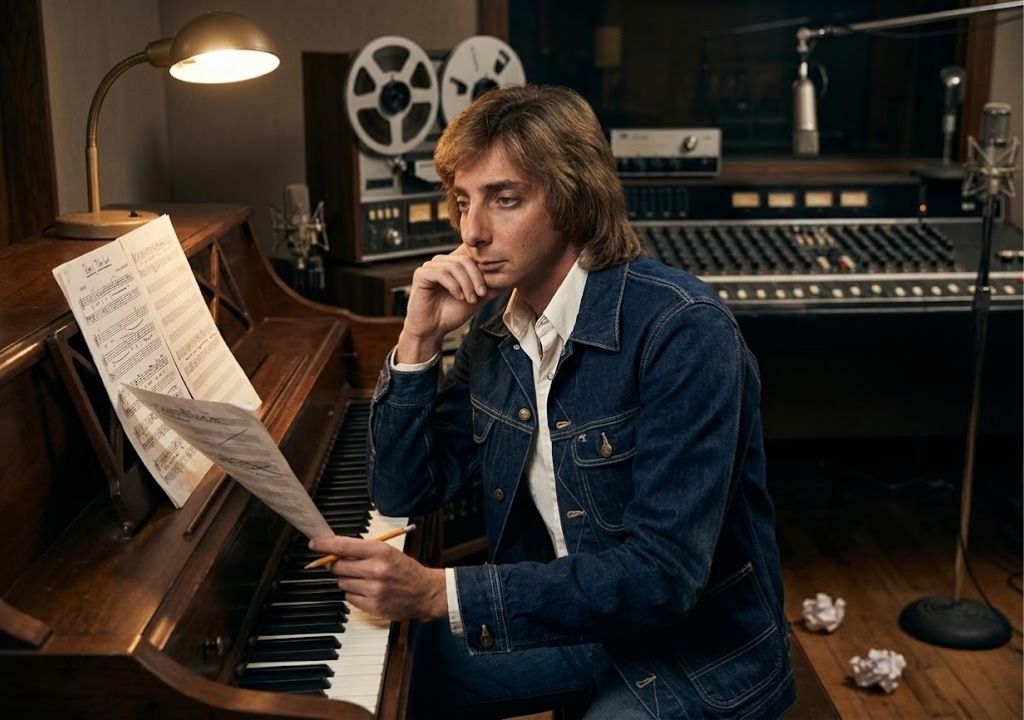
INTRODUCTION
In the humid summer of 1974, Barry Manilow sat at a piano in a New York City recording studio, grappling with a song he simply did not want to perform. To him, “Brandy”—the original title of the track—was a mundane, mid-tempo rock piece that lacked the sophisticated harmonic structure he craved as a serious musician. As a former jingle writer and musical director for Bette Midler, Manilow viewed the recording as a corporate mandate from the legendary Clive Davis of Arista Records. He feared that by embracing this outside material, he was diluting his artistic identity. Yet, it was in this moment of creative friction that the “Manilow sound” was truly born. By stripping away the uptempo rock arrangement and slowing the tempo to a dramatic, yearning crawl, Manilow unintentionally crafted the blueprint for the modern power ballad, propelling the song to the top of the Billboard Hot 100 on 01/18/1975.
THE DETAILED STORY
The friction between Barry Manilow and Clive Davis is now the stuff of music industry legend. Davis, possessing an uncanny ear for commercial viability, recognized a hidden gem within Scott English and Richard Kerr’s 1971 recording. However, Manilow’s resistance was rooted in a fierce desire to be recognized as a composer in his own right, rather than a mere interpreter of others’ songs. He found the original version of “Brandy” to be clunky and “too pop” for his jazz-inflected sensibilities. To resolve the artistic stalemate, Manilow agreed to record it under one condition: he would be allowed to arrange the track entirely in his own style.
The first crucial change was the title. To avoid confusion with the 1972 hit “Brandy (You’re a Fine Girl)” by Looking Glass, the name was changed to “Mandy.” More importantly, Manilow completely re-imagined the instrumentation. He discarded the aggressive guitar work of the original, replacing it with a delicate, emotive piano introduction that captured a sense of profound cinematic loneliness. This rearrangement shifted the song from a standard pop tune into a sweeping narrative of regret and redemption. While the production budget was modest, the emotional dividends were astronomical.
Upon its release in late 1974, “Mandy” did more than just climb the charts; it redefined the landscape of adult contemporary music. It earned Manilow his first Gold record and established Arista Records as a formidable new power in the entertainment world. Despite his initial disdain, Manilow witnessed firsthand how a performer can inhabit a song so fully that the boundary between the songwriter’s intent and the singer’s soul disappears. The success of “Mandy” provided the financial foundation for an empire that now includes a net worth estimated at $100,000,000 USD and a record-breaking residency at the Westgate Las Vegas Resort & Casino. Manilow eventually made peace with the track, acknowledging that without that initial push from Davis, his career might have remained confined to thirty-second commercial jingles and smoke-filled piano bars.