 By admin

INTRODUCTION
The coastal suburb of Rockdale in Sydney, Australia, became the unlikely theater for a radical experiment in auditory social engineering in mid-2006. Faced with a persistent influx of “boy racers”—local youths who congregated in public car parks to rev high-performance engines and blast aggressive electronic music—the Rockdale City Council sought a non-violent intervention. They did not deploy riot police or physical barricades; instead, they installed a sophisticated public address system designed to saturate the night air with the lush, orchestral romanticism of Barry Manilow’s greatest hits.
THE DETAILED STORY
This tactical application of Manilow’s music was predicated on a specific cultural paradox: the very sentimentality that endeared the artist to millions of devoted fans acted as a profound irritant to the subculture of late-night loiterers. Council officials observed that the sweeping crescendos of “Mandy” and the rhythmic storytelling of “Copacabana” created a “psychological friction” for the youths. The deliberate juxtaposition of the singer’s unashamedly earnest prose against the hyper-masculine, aggressive aesthetic of the car enthusiasts proved remarkably effective. By playing the tracks on a relentless loop between 9:00 PM and midnight, the city transformed the car park into an environment that was fundamentally “uncool,” forcing a voluntary retreat of the antisocial elements.
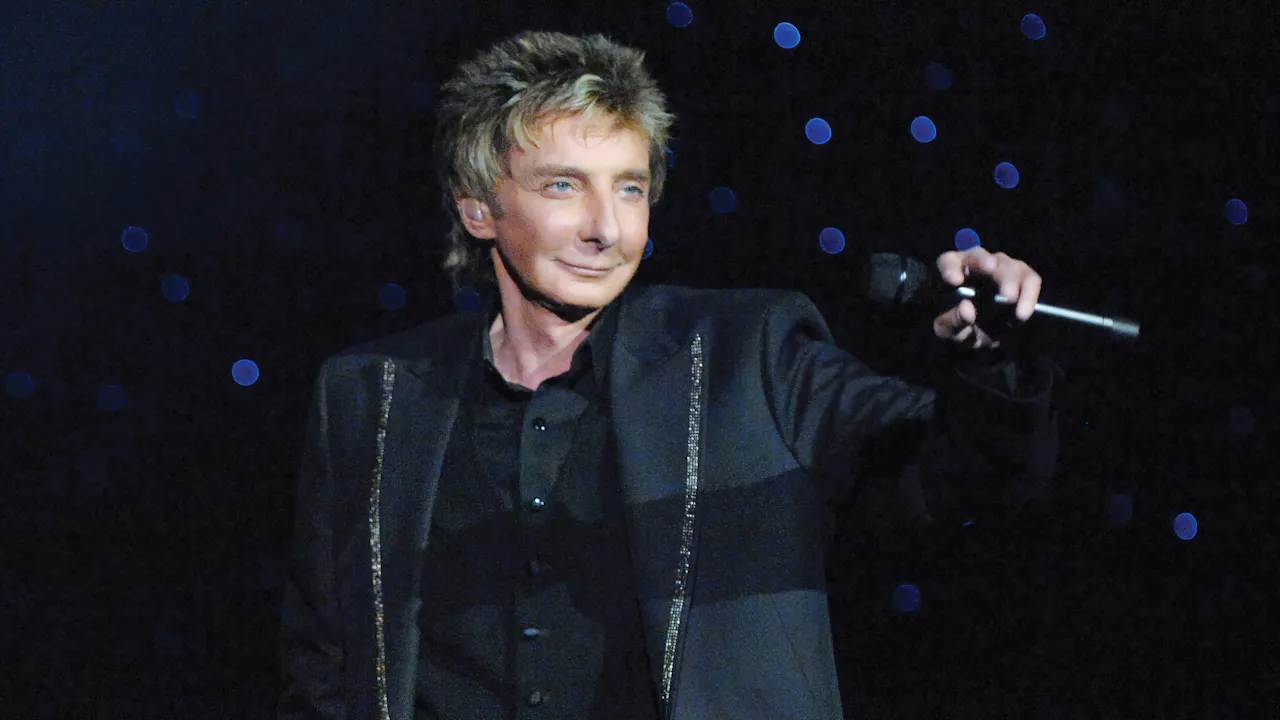
The “Manilow Method” was not an isolated incident of censorship, but rather a sophisticated form of “musical repellent.” Similar strategies have been documented globally, from New Zealand prisons allegedly restricting his albums to American judges sentencing noise violators to hours of his ballads. These instances highlight a fascinating nuance in global entertainment: Manilow’s work is so distinct in its emotional frequency that it can be used to delineate social boundaries. While no nation has officially “banned” his music through formal legislation, the selective deployment of his songs as a deterrent acknowledges his power to dominate a physical space through purely melodic means.
For Manilow himself, the news was met with a characteristic blend of amusement and professional pride. He famously quipped that if his music could help curb crime, he was happy to be of service. This saga underscores the incredible reach of his brand; even in the context of urban planning and law enforcement, his voice remains an inescapable cultural force. The Rockdale experiment remains a definitive case study in how the “sentimentality” so often derided by critics possesses a tangible, almost physical weight—one capable of clearing a car park more effectively than a sirens-blazing patrol.