 By admin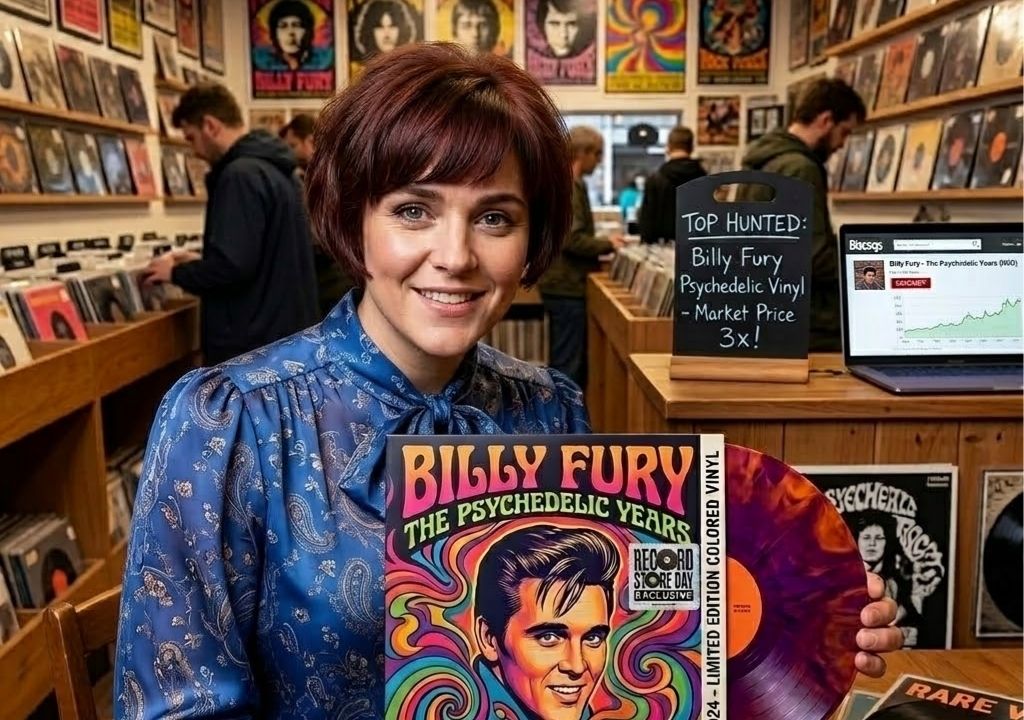
INTRODUCTION
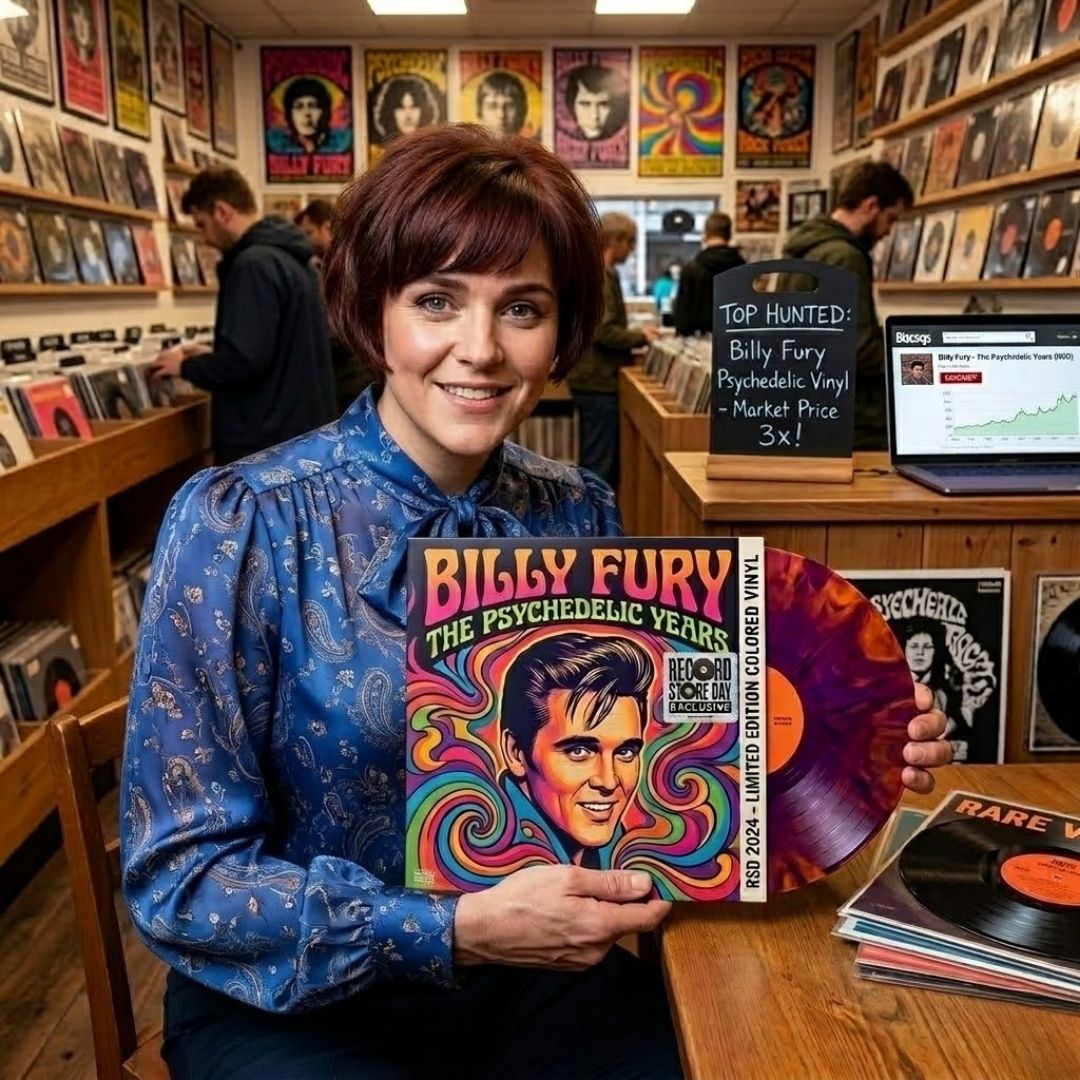
On the morning of 04/18/2026, as the first light touched the queues outside independent record shops from London to Liverpool, the conversation was dominated by the usual heavyweights of the vinyl revival. Yet, three days after the dust of Record Store Day has settled, the definitive victor of the 2026 event is not a modern pop star, but a ghost from the 1960s. Billy Fury’s The Psychedelic Years, a limited-edition colored vinyl compilation, has transitioned from a niche curiosity to the most hunted artifact on the global marketplace. Originally retailing for approximately $35.00 USD, the vibrant, multi-chromatic pressing is currently commanding prices upwards of $110.00 USD on platforms like Discogs and eBay. This sudden surge in valuation marks a cultural reappraisal of Fury’s most overlooked period—a time when the “British Elvis” shed his rockabilly skin to navigate the hazy, experimental soundscapes of the late sixties.
THE DETAILED STORY
The narrative surrounding Billy Fury has long been anchored to his 1960 masterpiece, The Sound of Fury, yet the 2026 frenzy centers on the sophisticated complexity of his 1967–1970 output. The Psychedelic Years collects these rare Decca-era sessions, where Fury’s tremulous, emotive baritone was paired with swirling organ arrangements, sitars, and the baroque production typical of the post-Sgt. Pepper landscape. For decades, these tracks were relegated to the footnotes of his career; today, they are the gold standard for collectors. According to data from Variety and Billboard, the demand for this specific RSD 2026 release has far outstripped its limited production run, leading to a 300% increase in market value within the first 72 hours of its release.
The technical allure of the vinyl itself—a “kaleidoscope swirl” meant to mirror the era’s aesthetic—has undoubtedly fueled the hysteria. However, the true value lies in the archival significance. Tracks like “Lady” and “Silly Boy Blue” reveal a performer of immense depth, successfully navigating a psychedelic transition that many of his peers failed to survive. Industry insiders at The Hollywood Reporter note that the “Fury Fever” of April 2026 is a symptom of a larger trend: the “discovery” of lost periods by legacy icons. As the “Most Wanted” tags proliferate on Discogs, the scarcity of The Psychedelic Years has transformed a simple piece of plastic into a high-yield investment.
This market behavior underscores a pivotal shift in the 2026 music economy. While streaming accounts for the vast majority of consumption, the physical record has become the ultimate voucher of cultural capital. For Billy Fury, a man who once shared the peak of the charts with The Beatles, this posthumous resurgence is a profound validation. The high-stakes trading of The Psychedelic Years proves that the public’s fascination with Fury is no longer just about nostalgia—it is about the enduring power of an artist who, even in the shadows of the psychedelic era, never lost his wondrous place in the history of British rock and roll.