 By admin
INTRODUCTION
In the late 1950s, the United Kingdom was a nation starved for the kinetic electricity of American rock and roll, viewing the rise of Elvis Presley through the distant, grainy lens of imported newsreels and forbidden airwaves. While most British artists of the era were content to produce pale, music-hall imitations of the Memphis sound, Billy Fury recognized that Presley’s power lay not just in the tempo of the music, but in the structural architecture of his persona. Fury did not merely listen to Elvis; he studied the geometry of his movement and the specific, breathy phrasing of his baritone, ultimately transmuting these American elements into a sophisticated persona that resonated with the post-war youth of Britain.
THE DETAILED STORY
The designation of Billy Fury as the “British Elvis” was an inevitable consequence of his meticulous attention to the Presley paradigm. Fury understood that the “Pelvis” was a revolution of the body as much as the voice. He adopted the heavy denim, the high-collared jackets, and the rebellious, downcast gaze that Presley had popularized, but he filtered them through a distinctly European lens of brooding romanticism. Where Elvis was often explosive and sun-drenched in his delivery, Fury’s interpretation was more shadowed and feline. He captured the essence of Presley’s “Sun Records” era—the raw, slap-back echo and the stuttering vocal delivery—and applied it to his own self-penned compositions, creating a bridge between American influence and British innovation.

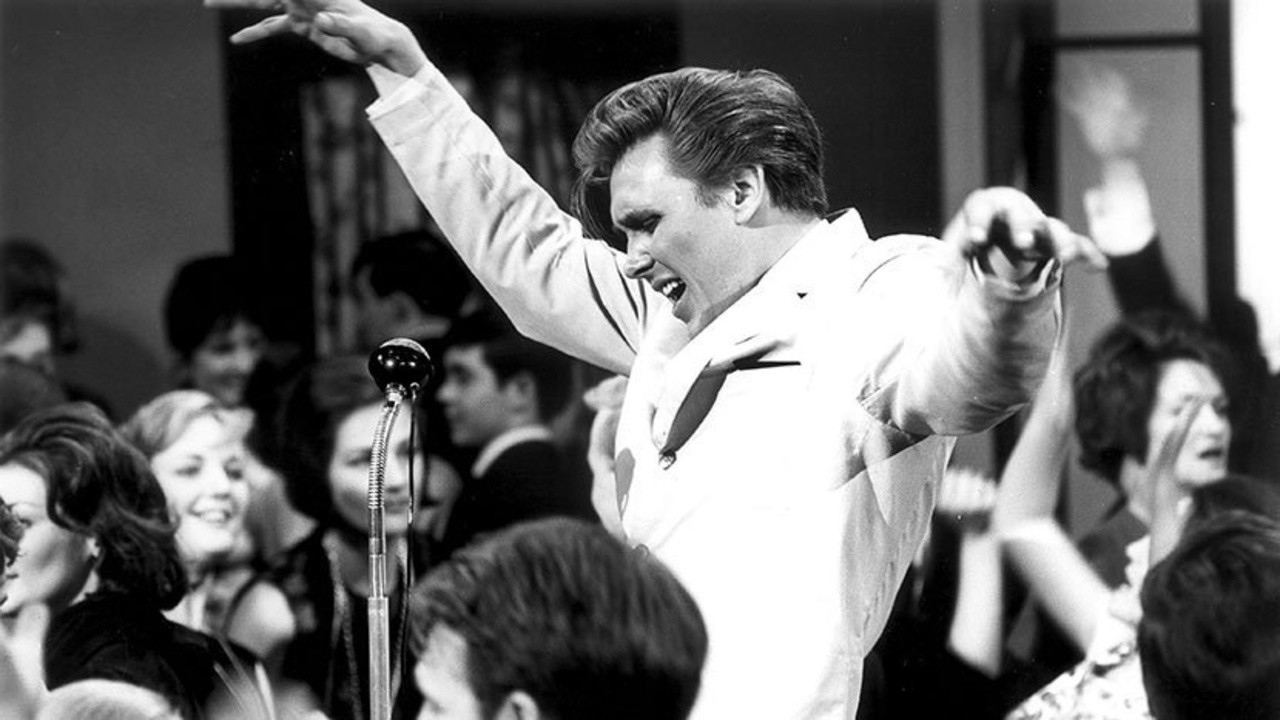
The technical overlap between the two icons was most evident in their live performance dynamics. Fury’s stage presence was a masterclass in the tension-and-release style Presley had pioneered. He utilized the microphone stand as a partner in a provocative dance, a move that famously led to several UK venues attempting to ban his “suggestive” choreography. However, Fury’s “British Elvis” moniker was never a sign of creative bankruptcy. On his seminal album, The Sound of Fury, he utilized the same rockabilly tropes—sparse instrumentation and walking basslines—but infused them with a Liverpudlian grit that predated the arrival of the Beatles.
By the early 1960s, the influence became a two-way street of cultural prestige. While Elvis remained the untouchable architect of the genre, Fury proved that the DNA of rock and roll could be successfully grafted onto a different national identity without losing its potency. He became the first British star to embody the “Total Package” of the American idol: the looks, the danger, and the genuine vocal capability. In doing so, he transitioned from a mere disciple of the Presley church to a sovereign leader of his own musical movement, ensuring that the flame of rock and roll would burn just as brightly in the rainy streets of Liverpool as it did in the humid air of Tennessee.