 By admin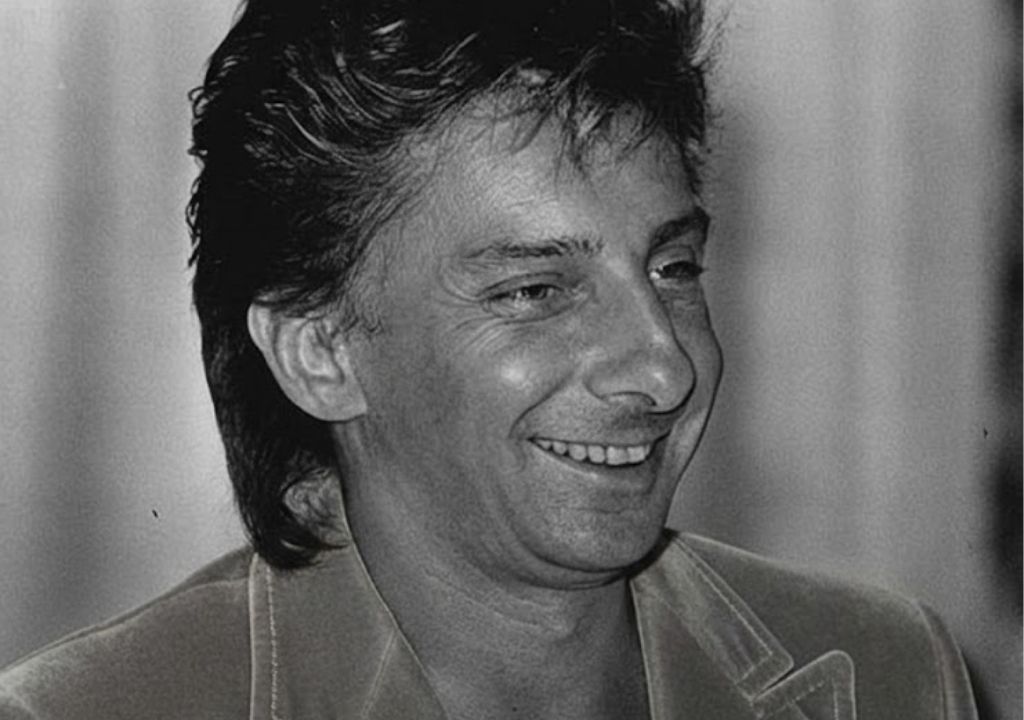
INTRODUCTION
In the cooling dusk of 2009, the Central City Mall in Christchurch, New Zealand, became the epicenter of a curious sociological experiment. Local authorities, weary of the standard tactical escalations required to disperse loitering youth, decided to pivot toward a more cerebral strategy. They didn’t install new physical barriers or increase the frequency of patrols; instead, they activated a series of high-fidelity outdoor speakers. The air, typically thick with the tension of potential civic friction, was suddenly filled with the grand, yearning piano chords of “Mandy” and the rhythmic vitality of “Copacabana.” This was not a celebration of the artist’s discography, but the deployment of a meticulously calibrated psychological deterrent.
THE DETAILED STORY

The “Barry Manilow Effect” is not a commentary on the artist’s professional caliber—which remains a paradigm of orchestral precision—but rather a sophisticated study in cultural dissonance. For the “mall rats” of Christchurch, the adult contemporary sound represented an aesthetic environment they found fundamentally intolerable. On 06/01/2009, the Christchurch Central City Business Association officially began broadcasting Manilow’s hits at a volume designed to be pervasive without violating noise ordinances. The objective was to replace the “cool” factor of the street with a high-gloss, sentimental atmosphere that effectively signaled a shift in territory from the rebellious to the domestic. It was an inevitable clash of subcultures where the weapon of choice was a well-placed modulation.
This method of “acoustic repellent” relies on a psychological phenomenon often referred to as the “Manilow Deterrent.” It creates a sensory mismatch between the environment and the target demographic’s identity. By the end of the first week, the crowds had diminished significantly, and the frequency of local disturbances plummeted. Police and business owners noted that the music acted as a “gentle nudge” rather than a physical confrontation, proving that the nuance of melody could achieve what the authority of the badge sometimes could not. Manilow himself responded to the news with his characteristic, sophisticated wit, noting that while he was surprised, he understood the power of a strong, undeniable arrangement to occupy a space.

The implications of this event extend beyond a simple urban anecdote. It underscores the profound influence of sonic architecture on human behavior. Manilow’s music, crafted to evoke deep emotional resonance, proved to be so potent that it could alter the social fabric of a city half a world away. It suggests that in the struggle for civic order, the baton of a conductor may indeed be as influential as the baton of a lawman. The Christchurch experiment remains a definitive example of how high-authority art can serve as a catalyst for behavioral modification, proving that even the most benign ballad can carry the weight of an invisible, yet absolute, social boundary.