 By admin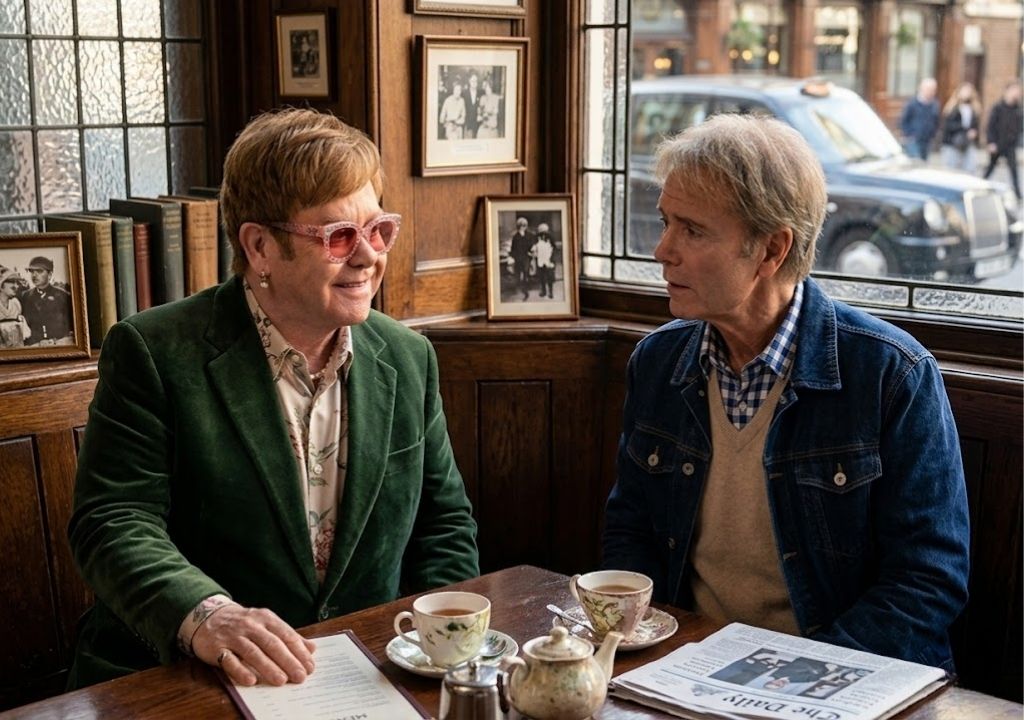
INTRODUCTION
In the damp, post-war twilight of 1958, a young Harry Webb, soon to be Cliff Richard, walked into Abbey Road Studios to record “Move It.” It was the birth of British rock and roll, a moment of raw energy that predated the global dominance of the Beatles. Fast forward to the mid-1970s, where Elton John, draped in sequins and oversized glasses, commanded the stage at Dodger Stadium, transforming the piano into a vessel of stadium-filling spectacle. These two men, though separated by aesthetic temperament, occupy the same rarified air of the United Kingdom’s musical aristocracy. Richard, the “Peter Pan of Pop,” maintained a clean-cut image that secured him a unique domestic devotion. John, conversely, became a global titan of camp and activism. Together, they represent the polarized spectrum of the British experience, proving that longevity requires either steadfast consistency or relentless metamorphosis.
THE DETAILED STORY
The divergence in their trajectories is most visible through the lens of the American market. While Sir Elton John achieved unparalleled saturation in the United States—amassing 56 Top 40 hits and becoming a fixture on the Billboard Hot 100 for decades—Sir Cliff Richard’s American presence remained comparatively modest, despite his staggering 14 Number One singles in the United Kingdom. This disparity highlights a fundamental truth about their artistry: Richard became a localized institution, a guardian of traditional British sensibility, whereas John operated as a trans-Atlantic conqueror.
By the early 1990s, their paths intersected in terms of philanthropic stature and royal recognition. Richard was knighted on 06/17/1995, the first pop star to receive the honor, followed by John on 02/24/1998. Financially, both have achieved staggering heights. Elton John’s “Farewell Yellow Brick Road” tour concluded in 2023 as the highest-grossing tour in history at the time, exceeding $939,000,000 USD. Meanwhile, Richard’s business acumen and real estate holdings, including his famed vineyard in the Algarve, reflect a different kind of mogul status—one built on steady, disciplined accumulation.
The narrative of their rivalry is largely a media construct, as the two have shared mutual respect and even collaborated on the 1986 charity single “She’s So Beautiful.” However, the philosophical gap remains. John’s career is a testament to the “Phoenix” model—constantly burning down his old persona to rise anew through fashion, social activism, and theatricality. Richard, conversely, has thrived on the “Anchor” model, providing a consistent, comforting presence for a demographic that values his unwavering public persona and spiritual convictions.
As the sun sets on the era of the solo male superstar, the legacies of these two titans offer a masterclass in sustainability. Whether through the radical honesty of Elton John’s memoir Me or the quiet resilience of Cliff Richard’s decades-long “Christmas No. 1” campaigns, they have both navigated the treacherous waters of fame with poise. Their influence is not merely measured in record sales, but in their ability to remain relevant while the industry around them underwent a total digital shift.